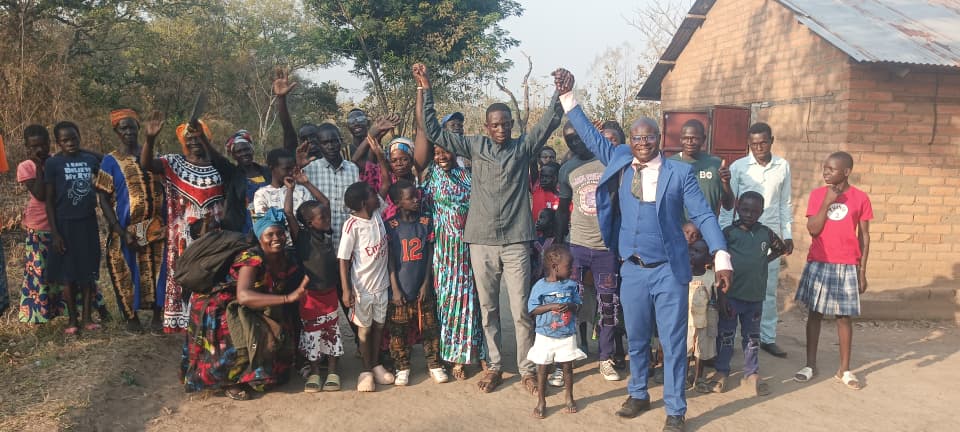
For generations, Christian missions have played a formative role in shaping communities around the world. Schools were established where none existed. Hospitals brought care to the sick and dignity to the suffering. Churches became centers of spiritual life, education, and social stability. In many regions, these institutions didn’t just serve communities, they formed them.
In recent decades, however, the missions landscape has been changing. New models have emerged that emphasize rapid multiplication of disciples and churches, often moving faster and with fewer formal structures. While these approaches have borne significant fruit, they also raise important questions about depth, sustainability, and long-term transformation.
At Empower One, we believe the future of missions does not require choosing between these models. Instead, we are intentionally integrating the best of both – institutional strength and multiplication – rooted in local, indigenous leadership.
The Historical Model: Missions That Took Root
Historically, missions were deeply place-based and long-term. Missionaries lived among the people they served, learned local languages, and invested in institutions that addressed the full spectrum of human need.
Globally, Christian missions were responsible for establishing some of the first schools, hospitals, and vocational training centers in underserved regions. Research has shown that areas with long-standing missionary institutions often experienced higher literacy rates, improved public health, and long-term social development that extended well beyond church walls.
These institutions created roots: forming leaders, strengthening communities, and allowing the gospel to be expressed not only through words, but through faithful presence over generations.
The Modern Shift: Speed, Simplicity, and Multiplication
More recently, many mission efforts have shifted toward Disciple-Making Movements (DMMs) and Church-Planting Movements (CPMs). These models prioritize simplicity, reproducibility, and rapid multiplication.
Globally, missiologists have documented thousands of these movements, representing tens of thousands of new disciples meeting in homes and small gatherings. The strengths of this approach are clear:
- Rapid spread of the gospel
- Leadership emerging from within communities
- Flexibility in restricted or hostile environments
These movements remind the global Church that the gospel was never meant to be centralized or dependent on outside professionals alone.
But speed can also come with tradeoffs.
The Tension: Depth vs. Velocity
While multiplication models excel at reaching people quickly, they do not always provide the deep roots needed for long-term, generational transformation.
Questions naturally arise:
- How are leaders theologically trained and formed over time?
- How are churches equipped to withstand persecution, conflict, or economic pressure?
- Who is discipling the next generation of leaders?
- How are communities being served holistically, spiritually, socially, and economically?
Institutional models, while slower, often address these questions well. Movement models, while fast, can struggle to sustain depth without intentional structures.
This tension has shaped much of today’s missions conversation.
The Empower One Model: Rooted and Multiplying
Empower One was formed out of this very tension and with a conviction that the future of missions must hold both depth and multiplication together.
Our model rests on three core commitments:
1. Institutional Strength for Long-Term Impact
We believe strong institutions matter.
Through theological schools, leadership training centers, and flagship churches, Empower One invests in durable structures that train pastors, church planters, and community leaders. These institutions provide:
- Deep biblical and theological formation
- Consistent leadership development
- Stability that serves communities over decades, not just seasons
These are not foreign or imposed institutions; they are locally led, contextually shaped, and designed to serve real needs within each community.
2. Multiplication That Extends Beyond the Institution
Institutions are not the end goal, they are launching pads.
Empower One’s flagship centers exist to multiply leaders and churches outward, equipping trained leaders to plant churches, disciple others, and extend ministry into unreached and underserved regions. This allows for:
- Reproducible church planting
- Ongoing discipleship beyond a single location
- Expansion that remains connected to training and accountability
We do not choose between depth and growth. We intentionally build systems where depth fuels multiplication.
3. Indigenous Leadership at Every Level
Perhaps most importantly, Empower One is committed to indigenous leadership.
Our work is not driven by outside voices or short-term solutions. Local leaders:
- Lead churches
- Train pastors and students
- Shape strategy and vision
- Shepherd their own communities
Outside partners come alongside, not above, supporting, resourcing, and strengthening what God is already doing through local leaders.
This approach fosters ownership, sustainability, and resilience. Churches are not dependent on external funding or leadership forever. Instead, they are equipped to thrive on their own.
A Model for Generational Transformation
At its heart, Empower One’s model is about faithfulness over time.
We believe true transformation happens when:
- Leaders are deeply formed
- Churches are healthy and multiplying
- Communities are served holistically
- The gospel takes root across generations
What This Looks Like in Yambio
Clement and Kala are South Sudanese, and both graduated from NEATS. The program runs two years. Students spend one month on campus, then two months back in their home churches applying what they studied, four times a year. No one graduates without helping plant a church.
Before Yambio, the two of them pastored in the refugee camps of northern Uganda, serving people who had fled the same war they had.
They arrived in Yambio, in Western Equatoria, in September of 2022. Healthy churches were scarce there. By the end of January they had planted six: Anzara, Yubu, Nadia, Hai Matara, Yabongo, and Kid. They were also making the six-hour drive north to Wau, asking what it would take to start extension centers in Bhar al Ghazal.
Their own churches chose them for NEATS. Their own communities feed students into the school. When they finished, they went where they judged the need to be greatest.
This is what we mean when we say depth fuels multiplication. The two years Clement and Kala spent in Kajo Keji are the reason six congregations meet in Yambio, and the reason those congregations have pastors who know how to teach.
The global Church does not need to abandon multiplication, nor does it need to return uncritically to older institutional models. It needs integrated, thoughtful, locally led approaches that honor both urgency and endurance.
That is the model we are building, and why we believe it matters.